
The AI-Driven 2026 Shop Floor: Where Quality Matters More Than Ever
trade look vastly different from those of even a few years ago.
While ratchets, wrenches, and heavy-duty lifts aren’t going anywhere, the automotive aftermarket is officially in the middle of a massive digital upgrade.
In 2026, Artificial Intelligence is actively reshaping how we diagnose vehicles, order parts, and interact with customers. For technicians and shop owners, understanding this shift is the key to staying profitable. If you are looking for the best way to wrap your head around these changes and explain them to your team and your customers, here is a breakdown of how AI is driving the need for quality techs – and quality parts – in a modern world.
AI as a Digital Co-Pilot

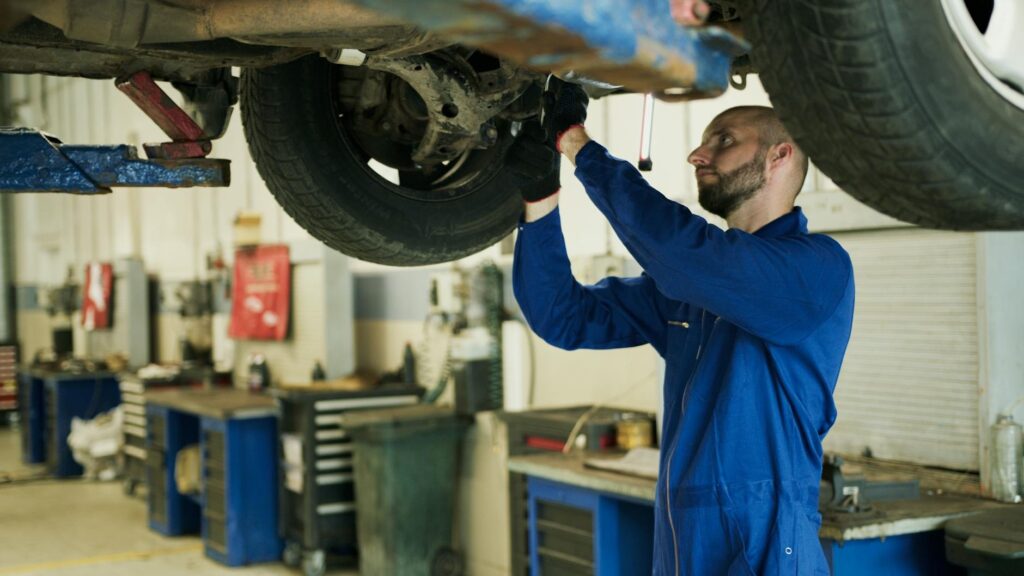

One of the biggest anxieties surrounding new technology is the fear of job replacement. Will AI take the job of a skilled technician? The short answer is no. Instead, industry experts agree that you won’t lose your job to AI; you are much more likely to lose your job to another technician who knows how to utilize AI effectively.
With the ongoing technician shortage, AI is stepping up as a powerful diagnostic co-pilot. Today, AI-powered assistants are trained on decades of expert repair data, forum discussions, and technical service bulletins. When a younger or apprentice technician hits a wall on a complex electrical issue, these AI models can instantly analyze the vehicle’s specific data and suggest the most logical diagnostic pathways. It’ll never turn the wrench, but it heavily streamlines the process of getting to a successful, accurate result.
As shops adapt to these technologies, we are seeing a shift in shop roles. Highly experienced, veteran technicians are increasingly taking on triage or data-analyst roles, using their hands-on knowledge to verify AI-generated repair plans and dispatch them to the rest of the team. Their biggest tool is their faith in the parts they recommend – this is where quality is king.
From Reactive Repairs to Predictive Maintenance


For decades, the auto repair industry has operated on a reactive model: a part breaks, the driver hears a funny noise or gets stranded, the vehicle gets towed in, and you fix it. Even basic inventory management – having the right part on the shelf at the right time – was dependent on good predictive business intelligence.
Looking forward, we expect AI to take this a step further by introducing true predictive capabilities. Modern vehicles are essentially rolling computers generating endless streams of telematics and sensor data. Modern fleet operations are beginning to use AI applications analyze this data in real-time to identify wear patterns and predict component failures before they happen.
AI will operate like a smart health monitor for a vehicle. Instead of waiting for a component to completely fail, systems can analyze vehicle data to tell us a part is nearing the end of its life. We can order the exact part, schedule the service, and avoid a breakdown that stalls the fleet.
Remaining faithful to high quality parts manufacturers, like GMB, gives techs a history of tried-and-true construction and materials, ensuring that the life expectancy of certain components can be accurately relayed to the customer. The same cannot be said of low-quality parts manufacturers who build down to a cost or allow large margins of quality variance between runs.
The Hurdles: Right to Repair and Data Security
Of course, this tech-driven utopia isn’t without its speed bumps. For AI to successfully predict when a part will fail, the software needs access to the vehicle’s telematics data. This makes the ongoing Right to Repair movement more critical in 2026 than ever before. If independent shops are locked out of manufacturer data streams, they cannot leverage these predictive tools to help their customers.
Pro-Tech Tip:
Relying on properly curated, industry-specific AI tools – rather than generic, open-source chatbots that can lead you down the wrong diagnostic path – is essential.
It’s also important to help your customers learn the difference.
Additionally, managing all this data requires a strict adherence to what tech developers call ‘responsible AI.’ Shops and parts distributors must ensure that customer data, vehicle history, and proprietary business information are locked down against cybersecurity threats.
Why Predictive AI Makes High-Quality Parts Non-Negotiable


Here is where the rubber meets the road for the parts industry. Predictive AI algorithms calculate the lifespan of a vehicle component based on strict factory engineering standards. They assume the part currently on the vehicle, and the part you are about to install, will perform exactly like the Original Equipment (OE).
If you install a low-quality, white-box aftermarket part with loose manufacturing tolerances, you completely throw off the vehicle’s data ecosystem. A cheap water pump or wheel bearing might fail thousands of miles before the AI system expects it to, resulting in a sudden breakdown, a disappointed customer, and a frustrated service advisor who promised a proactive repair experience.
As vehicles get smarter, your replacement parts must be absolutely bulletproof. This is why investing in OE or better quality components is non-negotiable.
At GMB, we understand that the future of automotive repair relies on uncompromising precision. GMB parts are engineered, tested, and manufactured to meet or exceed strict OE specifications. Whether you are replacing a complex electronic water pump or a heavy-duty U-joint, you can trust that GMB parts will integrate seamlessly into modern, data-driven vehicles and deliver the exact longevity and performance your customers expect.
- GMB Fan Clutch and Water Pump Kits
- GMB Timing Belt and Water Pump Kit
- GMB Fuel Pumps
- GMB Fan Clutches
- GMB Timing Belt with Tensioner and Idler Bearing Kits
- GMB Wheel Bearing and Hub Assemblies
- GMB Water Pumps
- GMB U-Joints
Ready to future-proof your repairs with parts you can trust? Explore GMB’s full lineup of OE-quality auto parts in the list above, and order today!